Best Places to Meet New People in Brookings, SD
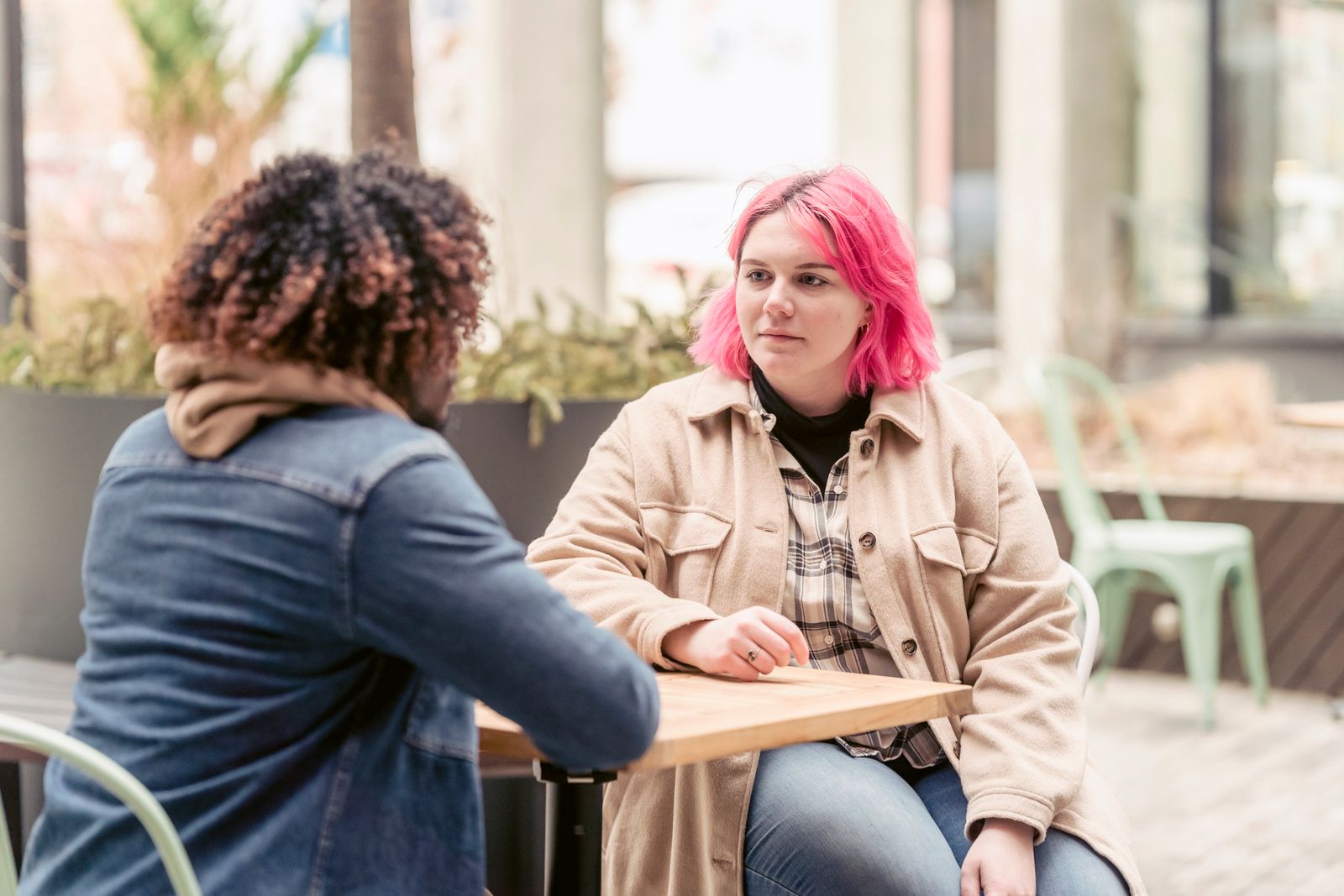
Meeting new people in a smaller city can be easier than it first appears. The key is not simply finding a place where people are present; it's finding settings where conversation happens naturally and where you can return regularly enough for casual encounters to become real friendships.
Short answer: the best places to meet new people in Brookings are SDSU clubs and organizations, SDSU intramural sports and sport clubs, downtown events like Downtown at Sundown, the Brookings Arts Council, Dakota Nature Park, McCrory Gardens, the Brookings Public Library, local coffee shops and breweries, the Brookings Activity Center (for adults 55+), and Brookings Area Chamber of Commerce events. What makes these work isn't the venue itself - it's that you can return to them regularly, which turns a one-time encounter into an actual friendship.
Meeting new people in a smaller city can be easier than it first appears. The key is not simply finding a place where people are present; it is finding settings where conversation happens naturally and where you can return regularly enough for casual encounters to become real friendships.
Brookings, South Dakota, has an unusually useful combination for this: South Dakota State University creates a large, changing social population, while the city has parks, recreation programs, arts organizations, community events, coffee shops, breweries, and civic organizations that bring together residents of different ages and backgrounds.
This guide focuses on places and recurring activities that are genuinely useful for meeting people rather than simply listing attractions. The strongest options are generally the ones where you can participate in something - playing a sport, attending a class, volunteering, exploring an event, or becoming a regular at a social venue.
Quick answer
For most adults looking to make new friends in Brookings, the best strategy is to choose a repeatable activity rather than a one-time destination.
The strongest options are:
| Place or activity | Best for | Social potential | Why it works |
|---|---|---|---|
| SDSU clubs and organizations | Students and young adults | Very high | Shared interests create an easy reason to talk |
| SDSU intramural sports | Active adults and students | Very high | Teams create repeated contact |
| Downtown events | Broad age range | Very high | Large crowds, music and shared activities |
| Brookings Arts Council | Creative people | High | Classes and recurring groups encourage conversation |
| Dakota Nature Park | Outdoors-oriented people | High | Walking, paddling and nature activities provide natural conversation starters |
| McCrory Gardens | Adults, families, nature lovers | Medium-high | Recurring community events create low-pressure interaction |
| Coffee shops | Casual socializing | Medium | Good for becoming a familiar face |
| Local breweries | Adults looking for relaxed social settings | High | Shared tables, events and conversation-friendly atmosphere |
| Brookings Public Library | Lifelong learners and community-minded people | Medium-high | Programs and events provide structured interaction |
| Recreation centers | Fitness and activity-oriented people | High | Repeated participation builds familiarity |
| Brookings Activity Center | Adults 55+ | Very high for its audience | Classes, games, trips, dances and other recurring programs |
The important distinction is that a busy venue is not automatically a good place to make friends. A quiet coffee shop may be better than a crowded bar when you can visit repeatedly. A recreational league may be better than either because it gives you the same people, the same activity and multiple opportunities to talk.
Brookings is particularly well suited to this approach because local organizations deliberately create opportunities for connection. The Brookings Area Chamber of Commerce, for example, explicitly describes events, volunteer committees and programs as opportunities to make new connections and expand one's social circle.
1. South Dakota State University: the biggest social ecosystem in Brookings
For people who are students - or who can legitimately participate in community-facing university activities - South Dakota State University is one of the richest sources of potential social connections in town.
The University Student Union describes itself as the center of campus life and a place where students meet friends, attend activities, use dining facilities, study and participate in student services. The building also houses spaces associated with student engagement and organizations.
The important point is that the Student Union itself is less useful as a "go somewhere and approach strangers" destination than as an entry point into campus activities.
SDSU maintains a large ecosystem of clubs, organizations, activities and events. Its student-life information specifically directs students toward Jacks Club Hub to discover organizations and get involved.
Why clubs work better than random socializing
Suppose you walk into a coffee shop and see ten people you do not know. You have almost no information about whether any of them wants to socialize.
In a club, the opposite is true. You already know:
- they have at least one interest in common with you
- they chose to participate
- there is an activity to discuss
- you are likely to see them again
That removes much of the awkwardness associated with meeting strangers.
SDSU's official involvement resources cover student organizations, events and other ways to participate in campus life.
For students, the practical strategy is therefore simple: choose one organization that genuinely interests you and attend more than once. One visit is an introduction. Three or four visits is when people begin recognizing you.
2. SDSU intramural sports: one of the easiest ways to build a social circle
Sports are particularly powerful for friendship-building because they solve one of the hardest problems in social interaction: what do you actually do while talking?
SDSU's Intramural Sports program provides structured competition for students and community members, with activities that have included flag football, badminton, basketball, table tennis, soccer and other sports. Adults over 18 who are eligible can participate through the program's membership options.
This is one of the strongest choices for someone who does not enjoy forced networking. You do not need to walk into a room and introduce yourself to twenty strangers. Instead, you join a team, play a game and naturally interact with the same people.
The repeated-contact effect is important: first session leads to recognition, recognition leads to conversation, conversation leads to shared jokes, and shared jokes lead to familiarity and eventually friendship.
The program also lists one-day tournaments and recreational activities beyond conventional team sports, meaning the concept is broader than simply joining a competitive league.
Who should choose this option?
Intramurals are especially suitable for:
- students
- young professionals
- newcomers to Brookings
- people who enjoy competition
- people who find conversation easier while doing an activity
- adults who want an existing social structure rather than an unstructured meetup
You do not need to be an elite athlete. The entire point of recreational and intramural programming is participation.
3. SDSU sport clubs and the Miller Wellness Center
SDSU also operates sport clubs that sit between casual intramurals and formal intercollegiate athletics. The university describes them as student-led organizations offering competition, tournaments, practice and leadership opportunities, and specifically notes that they can help people meet others with similar interests.
The university's recreation and fitness program includes sports clubs, intramurals, outdoor programs, group fitness, aquatic programs and other activities through the Miller Wellness Center. Its stated mission includes strengthening relationships through engaging programming and accessible spaces.
That makes the wellness center valuable not simply as a gym but as a social infrastructure.
A normal gym can actually be a difficult place to meet people because many people are focused on their individual workout. Organized group activities solve that problem. A class, club, tournament or outdoor program gives you a reason to interact.
A better approach than simply working out beside someone
Instead of repeatedly hoping to meet people while using exercise equipment, choose an organized activity, attend it recurringly, and let familiar faces turn into conversation. That formula works much better.
4. Downtown Brookings events
Downtown events can be among the best opportunities for people who want to meet a broad cross-section of Brookings rather than primarily students.
A strong example is Downtown at Sundown, the Chamber's recurring summer concert series. The event combines live music, food and beverages, vendors, activities and a family-friendly outdoor environment. The Chamber reported more than 17,000 attendees for the 2025 series in its 2026 member and sponsor guide.
The Chamber has described the event as a community-building activity designed to bring people together and highlight local businesses.
Large events are useful for meeting people in a different way from small clubs. At a club, you build relationships through repetition. At a large event, you get social exposure. You might meet local residents, SDSU students, young professionals, families, business owners, people who recently moved to town, or people who are visiting.
The mistake people make at large events
Walking around alone and waiting for someone to talk to you is usually ineffective.
Instead, use the environment. Talk to someone about the music. Comment on an activity. Ask about a food vendor. Join a yard game. Talk to someone standing near a booth.
The event gives you conversation material for free.
5. Coffee shops: good for becoming a familiar face
Coffee shops are often underrated places to meet people because their value comes less from a single encounter and more from frequency.
Several downtown or nearby Brookings coffee businesses provide natural environments for informal social interaction. For example, Cottonwood Coffee is located downtown on Main Avenue, while Drip Coffee provides another coffee-oriented setting in Brookings.
The objective should not be to walk into a cafe and immediately try to make a new best friend. Instead:
- Visit regularly.
- Sit in a socially appropriate common area.
- Become familiar with the staff and environment.
- Notice recurring customers.
- Start with small conversations.
- Gradually move from recognition to familiarity.
This is especially effective for remote workers, freelancers, graduate students and people with flexible schedules.
A cafe can become a social anchor - a place where you repeatedly encounter the same segment of the local population.
Coffee shops versus organized groups
| Situation | Coffee shop | Organized group |
|---|---|---|
| Easy to attend alone | Excellent | Good |
| Conversation built into activity | Low | High |
| Repeat encounters | High | Very high |
| No commitment required | Excellent | Varies |
| Good for introverts | Often | Yes, especially activity-based |
| Friendship potential | Moderate | High |
Coffee shops work particularly well when combined with another activity. For example, you may meet someone through an event or class and then eventually see them again at a local cafe.
6. Local breweries and relaxed evening social spaces
For adults who enjoy a more conversational evening setting, Brookings has several breweries where the atmosphere can be more conducive to meeting people than a conventional restaurant.
Eponymous Brewing Company is located at 126 Main Avenue South, and Wooden Legs Brewing Company is located on Fifth Street. Both are established downtown-area brewery options.
The advantage of this type of venue is the shared social environment. People may be meeting friends, attending an event, sitting at communal spaces, discussing local activities, visiting downtown after work, or looking for somewhere casual rather than formal.
That does not mean every brewery is automatically a good place to approach strangers. Social norms still matter.
The most effective opportunities usually appear when the venue has an activity or event attached to it. A game, trivia night, special event or shared entertainment gives strangers something to discuss without requiring a cold introduction.
A simple rule
Do not approach someone solely because they are alone. Approach through context.
For example, "Have you been to one of these before?" is much easier than "Can I talk to you?" The first question is about the situation. The second makes the social objective itself the topic.
7. Brookings Public Library
Libraries have evolved far beyond being quiet buildings where people simply borrow books.
The Brookings Public Library is a useful option for people who prefer quieter, activity-based social settings.
For people interested in meeting others through learning, discussion or community programming, libraries offer something bars and cafes cannot always provide: a structured reason to be there together.
That distinction matters. A person who attends a talk, workshop, discussion, reading or community program has already signaled an interest in the subject. That creates a natural opening for conversation.
A good library strategy
Instead of asking "Where can I meet people?" ask "What topic would I enjoy discussing with other people?" That might be books, local history, technology, crafts, parenting, education, hobbies or community issues.
People who share interests tend to be easier to connect with than random strangers.
8. Brookings Arts Council
For creative people, the Brookings Arts Council may be one of the most naturally social environments in the city.
Its mission explicitly centers on community connections through the arts, and it offers classes, exhibitions and other arts activities.
The organization also supports recurring groups rather than relying only on one-off events. For example, its current club information lists the Basement Painting Group, which meets weekly and welcomes people to work on creative projects together. The organization also lists a figure-drawing group and other creative communities.
This is almost an ideal friendship environment because the social interaction is incidental to the activity. You arrive intending to paint, draw or create. You leave having talked to people.
Why creative groups work
Creative activities generate low-pressure conversation: "What are you working on?", "How did you learn that?", "What medium are you using?", "Have you done this class before?", "Do you come here often?"
You do not have to manufacture a reason to speak. This is particularly useful for people who find traditional networking uncomfortable.
9. McCrory Gardens
McCrory Gardens offers a different type of social environment: slower, quieter and more activity-oriented.
South Dakota State University describes McCrory Gardens as a place centered on connecting people and plants. Its programming includes recurring Community Days, seasonal events and activities such as Party on the Porch, the Insect Festival and other public programming.
Community Days are particularly relevant because they are explicitly recurring and free for everyone, rather than being designed solely around tourists or one-time visitors.
The gardens can therefore work well for people who enjoy nature, gardeners, photographers, families, retirees, students, people interested in horticulture, and anyone who prefers calmer social environments.
It is less suitable if your objective is to meet as many strangers as possible in one evening. It is more suitable if you want pleasant repeated exposure to people with overlapping interests. And that is often a better way to create actual friendships.
10. Dakota Nature Park
If your preferred social environment is outdoors rather than indoors, Dakota Nature Park is one of Brookings' strongest choices.
The City of Brookings describes the 135-acre park as a year-round recreation area with fishing, canoeing, paddleboarding, kayaking, bird-watching, hiking, biking, picnicking, snowshoeing and cross-country skiing. The Larson Nature Center provides education, programming and opportunities for social interaction.
That range of activities is important because outdoor recreation creates multiple opportunities to interact - through walking, biking, paddling, birding, fishing, educational activities, volunteer or organized programs, and social gatherings at the nature center.
Dakota Nature Park is especially appealing to people who dislike loud indoor environments.
How to make an outdoor location social
Don't simply walk with headphones on every time. Instead, occasionally choose an environment that encourages interaction: attend an organized nature activity, bring a dog when appropriate and permitted, join a walking group, participate in a park program, attend a public event, or take part in a recreational activity.
The environment is already doing half the work.
11. Larson Rec Center and organized recreation
For people who want something more structured than simply visiting a park, recreation facilities can provide recurring contact with the same local residents.
Larson Rec Center is one option in Brookings' recreational infrastructure. The broader city recreation system also includes parks, aquatic facilities and other programs. The value of these places for socializing comes primarily from programming, not from walking into the building and expecting spontaneous conversations.
Look for classes, leagues, open recreation, community activities, tournaments, seasonal programs and group exercise.
This is another case where the activity matters more than the building.
12. Brookings Activity Center for adults 55+
For older adults, one of the clearest answers is the Brookings Activity Center.
The City of Brookings says the center is designed for people 55 and older and offers educational programs, art classes, fitness classes, games, recreational activities, day trips, dances and special events.
That makes it fundamentally different from a generic public venue. The social component is built into the program. Someone who attends a class or game has repeated opportunities to see the same people and gradually become part of the community.
The city's facility information specifically highlights activities such as exercise classes, cards and pool.
For older residents who have recently moved to Brookings, retired, lost contact with former coworkers or simply want a broader social network, this can be substantially more effective than trying to meet people in an unstructured setting.
13. Brookings Area Chamber of Commerce and professional networking
Friendship does not always begin with a purely social activity.
For professionals, entrepreneurs, business owners and newcomers, the Brookings Area Chamber of Commerce provides a strong network of recurring events and volunteer opportunities.
The Chamber explicitly promotes committee involvement, event participation and programs as ways to develop new connections and meet people outside one's immediate circle.
The Chamber also runs community-facing events rather than limiting its role to conventional business networking. Its programming has included major community gatherings and leadership initiatives.
This matters because professional connections often turn social. A conversation that begins with "What do you do in Brookings?" can eventually become "Do you want to grab coffee?"
The important principle is not to treat everyone as a lead or potential client. Go for genuine community involvement.
14. Major events at the Dacotah Bank Center
The Dacotah Bank Center is another useful social connector because it hosts concerts, sporting events, community celebrations, conferences and other gatherings. The City of Brookings describes it as a community-owned event and gathering space.
Its event calendar covers a wide range of audiences, from community events to sports, entertainment and organizational gatherings.
The facility therefore works best as a social catalyst. Don't necessarily think "I am going to the Dacotah Bank Center to make friends." Think "I am going to an event that attracts the kind of people I would like to know."
For example, an art event attracts a different crowd from a sporting event, and a professional luncheon attracts a different crowd from a concert. The event determines the social network.
15. Downtown Brookings as a social neighborhood
One of the biggest mistakes in a "best places to meet people" article is focusing entirely on individual businesses.
In a smaller community, an entire district can be more valuable than a single venue.
Downtown Brookings combines restaurants, coffee, retail, entertainment, community activities and recurring events. The Chamber's Downtown at Sundown programming demonstrates how the downtown area can function as a citywide gathering space.
The advantage is variety. You can start with coffee, walk downtown, attend an event, stop at a brewery, and encounter people in more than one setting.
That makes the downtown area particularly useful for people who do not yet have a defined social circle.
The best options by personality
The "best" place depends heavily on how you naturally socialize.
| Your personality or goal | Best Brookings option | Why |
|---|---|---|
| Very outgoing | Downtown events, breweries | Lots of spontaneous interaction |
| Introverted | Arts groups, library programs, organized recreation | Conversation has built-in context |
| Student | SDSU clubs and organizations | High concentration of people with shared interests |
| Young professional | Chamber, downtown events, recreation | Mix of professional and social connections |
| Outdoorsy | Dakota Nature Park, outdoor programs | Activity creates conversation |
| Creative | Brookings Arts Council | Repeated interaction around shared projects |
| Fitness-oriented | Intramurals, sport clubs, group fitness | Regular contact with similar people |
| 55+ | Brookings Activity Center | Structured recurring social programming |
| New to town | Chamber events, SDSU community activities, downtown events | Broad exposure to local residents |
| Looking for quieter conversations | Coffee shops, library, McCrory Gardens | Lower-intensity environments |
| Looking for a large social crowd | Downtown festivals and major events | High concentration of attendees |
The places that are best for actually making friends
There is an important difference between meeting people and making friends.
A packed festival may allow you to talk to twenty people but remember nobody. A small weekly painting group may allow you to speak to five people and become close to two.
For lasting relationships, social environments generally rank according to five factors:
| Factor | Why it matters |
|---|---|
| Repetition | Seeing the same people again creates familiarity |
| Shared interest | Gives you an immediate conversation topic |
| Participation | Doing something together is easier than standing around |
| Small enough for interaction | Huge crowds can make individual conversations difficult |
| Low social pressure | People are more relaxed when interaction isn't forced |
This explains why a recreational league, art group or club can outperform a crowded nightlife venue for someone specifically seeking friendships.
A practical strategy for someone new to Brookings
Moving to a new city often creates a strange problem. You can be surrounded by people while still feeling socially isolated.
The answer is rarely to visit as many places as possible. It is usually to choose fewer places and become a regular.
- Choose one recurring activity. Examples include an intramural sport, arts group, recreation class or university organization.
- Choose one casual social venue. A coffee shop, downtown venue, brewery or similar place can work well.
- Attend consistently. Do not judge a place after one visit. The first visit is usually the least socially productive because nobody knows you.
- Start with weak connections. You don't have to leap directly into close friendship. The progression is usually: stranger, familiar face, acquaintance, casual friend, friend.
- Follow up. This is where many people stop - you have a good conversation, then never see that person again. Instead, say "I'm going to be here again next week" or "Are you coming to the next game?" Small follow-ups create continuity.
Best places for introverts in Brookings
Introverts often do poorly with the advice "just go out and meet people." The problem is not necessarily lack of social ability. It is that random social environments offer no context.
A better approach is to choose environments where there is a shared task. The best options are the Brookings Arts Council (you can work on something while talking), library programs (you already have a common topic), intramural or recreational sports (the game creates natural interaction), McCrory Gardens events (the environment itself creates conversation topics), Dakota Nature Park activities (outdoor interests provide an easy starting point), and coffee shops (useful for gradual familiarity rather than forced introductions).
The general principle is simple: pick activities where talking is optional but natural. That is often much easier than going somewhere whose sole purpose is socializing.
Best options for students
Students have an advantage in Brookings because SDSU creates a ready-made social network.
The strongest student pathways are student organizations and clubs, intramural sports, sport clubs, university events, Student Union activities, residence-life and campus activities, and recreation and fitness programs.
SDSU's official resources repeatedly direct students toward organizations, activities and programs as ways to become involved in campus life.
The critical mistake is staying within the same narrow friend group all semester. A club outside your major can dramatically broaden the people you know.
Best options for young professionals
Young professionals often face a different challenge. After university, there is no automatic system putting dozens of potential friends in the same building every day. That makes community organizations especially valuable.
The strongest combination is a professional event plus a recreational activity plus a casual downtown venue. For example, someone might attend a Chamber event, join an intramural team, and become a regular at a coffee shop. That creates three different social networks - professional, activity-based, and casual/local - which can overlap over time.
The Brookings Area Chamber specifically identifies events, committees and programs as opportunities to make new connections, including for people seeking a new social circle.
Best options for newcomers and transplants
People who recently moved to Brookings should prioritize places where residents and newcomers mix.
Strong candidates include community-wide events (which expose you to residents outside your workplace), Chamber programs (useful for connecting with professionals and community participants), downtown events (good for broad social exposure), recreation programs (particularly effective because the same participants can appear repeatedly), and arts and hobby groups (useful because the shared interest reduces social friction).
The Chamber has also highlighted community initiatives focused on retaining SDSU students and young professionals and helping new residents find their way in Brookings.
A weekly "meet people" routine that can actually work
Rather than randomly searching for places every Friday night, create a repeatable rhythm.
| Day or occasion | Example social activity | Goal |
|---|---|---|
| One weekday | Coffee shop | Become a familiar face |
| One weekday | Group class, sport or club | Meet the same people repeatedly |
| Weekend | Downtown or community event | Expand your circle |
| Monthly | Larger civic or cultural event | Meet people outside your normal routine |
The precise schedule is less important than consistency. Imagine attending one random event every month versus participating in one group every week - the second approach produces more social repetition.
What not to do
There are several approaches that sound reasonable but often produce disappointing results.
- Don't chase crowds. A crowd gives you exposure, not necessarily connection.
- Don't limit yourself to nightlife. Alcohol-oriented venues can be social, but they are only one kind of social environment. Brookings has strong alternatives in recreation, arts, education, university activities and community programming.
- Don't expect one visit to prove anything. Friendships require repeated exposure.
- Don't approach every stranger with a friendship agenda. People generally respond better to authentic situational conversation.
- Don't stay only with the people you already know. At an event, deliberately spend at least part of your time outside your existing group.
- Don't confuse convenience with compatibility. The closest venue is not necessarily where you will meet people who share your interests.
How to start a conversation without making it awkward
The best opening question is usually connected to what is already happening.
- At an event: "Have you been to this before?"
- At a sport: "Is this your first season?"
- At an arts class: "What are you working on?"
- At a coffee shop: "Is that drink any good?"
- At a park: "Do you come here often for this trail?"
- At a university activity: "How did you hear about this group?"
These work because they are not trying to create instant intimacy. The objective is simply to open a door.
Once a conversation is going well, the next step can be extremely simple: "I'm usually around here on Thursdays" or "Are you coming to the next one?" That creates a reason to meet again without turning the exchange into a formal invitation.
The most important idea: choose recurring social environments
The best places to meet people in Brookings are not necessarily the most famous places. They are the places where you can return regularly and participate in something meaningful.
That is why the following options stand out: SDSU clubs, organizations, intramurals and sport clubs for students; intramural sports, recreation programs and Dakota Nature Park for active adults; Brookings Arts Council classes and recurring arts groups for creative people; McCrory Gardens and Dakota Nature Park for nature lovers; the Brookings Activity Center for older adults; Brookings Area Chamber activities and community events for professionals and newcomers; and downtown coffee shops, breweries and community events - including businesses such as Cottonwood Coffee, Drip Coffee, Eponymous Brewing Company and Wooden Legs Brewing Company - for casual socializing.
The best choice ultimately depends on the kind of people you want to meet.
Conclusion
Brookings has more social infrastructure than its size might suggest.
The city benefits from the presence of South Dakota State University, a strong downtown, active parks and recreation programs, community organizations, arts programming and recurring public events. The result is that meeting people does not have to depend on luck or nightlife.
The most reliable formula is: find something you genuinely enjoy, participate regularly, see familiar people, start small conversations, return, and build the relationship.
A large event can introduce you to the community. A weekly activity can turn those introductions into friendships. And that is ultimately what makes a place genuinely good for meeting new people.
Frequently asked questions
Where is the easiest place to meet new people in Brookings, SD?
For students, SDSU organizations and intramural sports are among the easiest options because shared activities create repeated interaction. For the broader community, recurring recreation programs, arts groups, Chamber events and downtown community events can be equally effective.
What is the best place in Brookings for making actual friends?
Recurring activities usually outperform one-time events. A sports league, club, art group, class or volunteer activity gives you repeated contact with the same people, which is much more conducive to friendship than a single large event.
Where can young adults meet people in Brookings?
SDSU activities, intramural sports, sport clubs, downtown events, coffee shops, breweries and professional/community events are among the most useful options. SDSU's recreation programs also include opportunities for community members.
Is SDSU only useful if I'm a student?
Much of SDSU's student-organization ecosystem is student-oriented, but some programs are explicitly open to community members. SDSU intramural sports, for example, are available to community participants through the program's eligibility and pass system.
Where can older adults meet new people in Brookings?
The Brookings Activity Center is specifically designed for adults 55+ and offers classes, games, fitness, trips, dances and special events.
Are there places to meet people without drinking?
Yes. Strong alternatives include the Brookings Public Library, Brookings Arts Council, McCrory Gardens, Dakota Nature Park, SDSU recreation programs, intramural sports and community events.
What's the best strategy if I'm shy?
Choose an activity with built-in conversation rather than a venue where socializing is the only activity. Art groups, sports, classes, nature activities and clubs are generally easier because you already have something to discuss.
Should I attend events alone?
Yes. Going alone can actually make it easier to talk to new people because you are not anchored to an existing group. The key is choosing events where participation is possible rather than simply standing in a crowd.
Give your next plan one address instead of one more thread.
Plan it with Ontaym