Best Places to Meet New People in Frisco, Texas
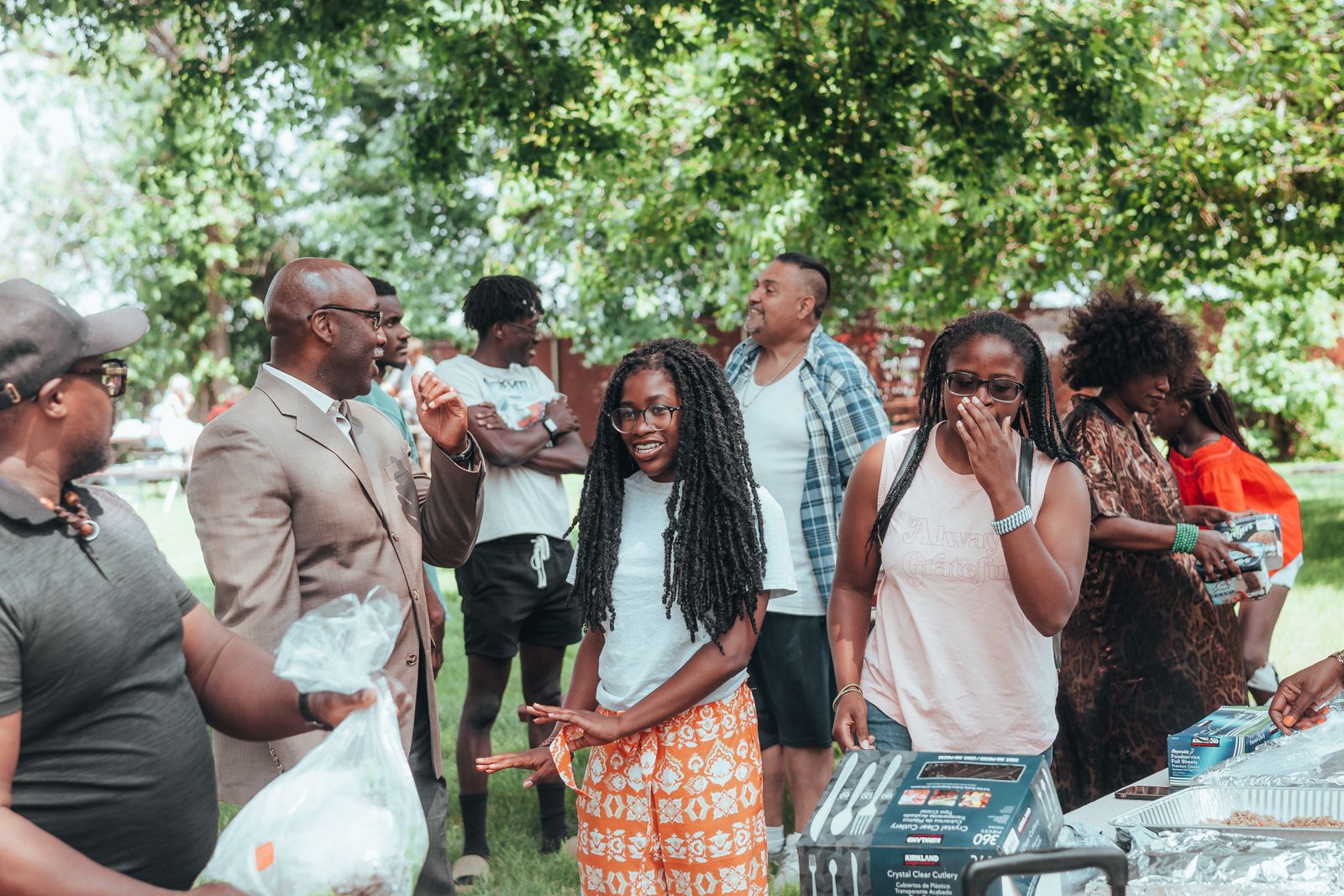
Meeting new people in Frisco is less about finding one magical venue and more about choosing environments where conversation has a reason to happen. The strongest options are the ones people return to again and again.
Meeting new people in Frisco is less about finding one magical venue and more about choosing environments where conversation has a reason to happen.
The strongest options tend to have one or more of four characteristics: people return regularly, participants already share an interest, the activity creates natural conversation, or the setting makes it easy to join a group without knowing anyone beforehand. That is why a recurring fitness class can be better for making friends than a crowded restaurant, and why a volunteer shift can sometimes produce stronger connections than a large festival.
Frisco offers all of those formats. The city has more than 60 parks and a growing hike-and-bike trail system, year-round recreation programs, cultural programming, volunteer opportunities, a public library with adult clubs and events, active-adult programming, sports venues, and organized social groups. The best choice depends on what kind of connection you are looking for.
Quick answer: where should you go to meet people in Frisco?
| Place or activity | Best for | Why it works socially | Repeat potential |
|---|---|---|---|
| Frisco Public Library | Quiet or interest-based socializing | Clubs, programs and shared interests give people something to discuss | High |
| Parks and trails | Casual friendships | Walking, recreation and outdoor activities make conversation natural | High |
| Frisco Athletic Center | Active adults | Group exercise creates repeated contact around a shared activity | High |
| Kaleidoscope Park | Families, arts and community activities | Public programming creates shared experiences without requiring a formal group | High |
| Frisco Rail District | Casual socializing | Restaurants, coffee, shops and communal spaces offer many ways to linger | Medium |
| Frisco Heritage Center & Discovery Center | Arts, history and creative interests | Classes, performances and cultural programs provide conversation starters | High |
| Volunteering | Community-minded people | Working together creates a stronger reason to talk than simply being nearby | High |
| Sports and fan events | Sports fans | Shared enthusiasm gives strangers an immediate subject | Medium to high |
| Meetup and organized groups | People specifically looking for connection | The purpose is already social or interest-based | High |
| The Grove at Frisco Commons | Adults 50+ | Classes, events, games and social activities are designed around community | High |
The important distinction is that these are not all "social venues" in the traditional sense. Some are places. Others are systems for creating repeated contact. That distinction matters because making a friend usually takes more than one conversation.
Why some places are much better for making friends than others
There is an easy mistake to make when looking for places to meet people: choosing the location with the largest crowd. A crowd gives you access to more strangers, but it does not necessarily make interaction easier.
Imagine two situations. In the first, you stand in a busy shopping center surrounded by hundreds of people. You may technically have hundreds of opportunities to talk to someone, but there is no obvious reason to start a conversation. In the second, you join a small walking group. Everyone already has one thing in common: they came to walk.
The second setting has fewer people but more usable social opportunities. This is why activities built around a shared purpose tend to be particularly effective. A class gives people a reason to speak. A volunteer project gives them a task to complete together. A book club gives them a topic to discuss. A recreational league creates repeated encounters.
For someone trying to make friends in a new city, repeatability is one of the most valuable features of a social activity. A single festival can be enjoyable. A weekly class can create familiarity. A large event may put you next to fifty new people. A recurring group may put you next to the same eight people five times. The latter is often much more useful.
1. Frisco Public Library
The Frisco Public Library at 8000 Dallas Parkway is one of the most useful places in Frisco for people who prefer structured, interest-based socializing rather than loud nightlife. That is partly because the library is more than a place to borrow books.
Its programming includes adult activities, book clubs and other community events. The library currently maintains multiple book-club formats, including an in-person science-fiction and fantasy group, an adults-only Reader's Choice club, an adult ESL book club and a group aimed at older readers.
The Silent Book Club is an especially interesting model for people who find conventional social events uncomfortable. There is no assigned book. Participants bring something they want to read, spend time reading together, and can discuss what they are reading afterward, or simply leave it at that. That structure solves a common problem with socializing: you do not have to invent an opening line. You can ask, "What are you reading?" That is enough.
Why the library works
Libraries are particularly useful for three groups of people. First are people who enjoy intellectual or creative interests. Second are people who dislike loud environments. Third are people who want a social setting without the pressure of a conventional "mixer."
The library also creates opportunities for people interested in starting something themselves. Its Book Club in a Box program, for example, provides multiple copies of titles along with discussion materials and resources for organizing a club. That means the library is not merely somewhere you attend an existing activity. It can also be a starting point for creating a recurring group.
Best approach: Choose one recurring club or program and attend more than once. Do not judge the social potential of a group entirely from the first meeting.
2. Frisco parks and trails
Frisco's parks and trails are among the easiest places to begin meeting people because they support activities that naturally occur alongside conversation.
The city has more than 60 parks, including community parks with amenities such as pickleball, basketball and tennis courts, sand volleyball, dog parks and disc golf. Frisco also maintains a growing hike-and-bike trail network. That creates several different social formats: you can walk, join a recreational activity, bring a dog, participate in organized sports, attend a community event, or simply use a park as the meeting point for a group you organize yourself.
The key is not merely going to a park and hoping somebody talks to you. A solo walk can be pleasant, but it is not necessarily a social strategy. A group walk is different. A pickleball session is different. A recurring outdoor activity is different.
Parks that are especially useful for social activities
Frisco Commons Park is useful because it sits alongside The Grove and connects to the broader recreational environment. Northeast Community Park and other large community parks support organized activities and sports. Cottonwood Creek Greenbelt is particularly interesting for people who prefer quieter outdoor environments: a 77-acre natural area with nearly two miles of trails, wetlands, ponds and wildlife-viewing areas.
For someone who is uncomfortable approaching strangers at a party, an outdoor activity gives you a different entry point: "You come here often?" is a much easier question when both people are standing on the same trail than it would be across a crowded bar.
3. Frisco Athletic Center
For people who already like exercise, or would like a reason to become more active, the Frisco Athletic Center is one of the strongest repeat-contact environments in the city.
It is a large fitness and aquatic center with more than 100,000 square feet of indoor wellness opportunities. Its fitness programming includes more than 70 group exercise classes per week, with classes available at different times throughout the day. That matters socially because recurring classes create a built-in rhythm: you show up, you see the same people, you become familiar, and then conversation gets easier.
This is very different from going to a traditional gym, putting on headphones and never interacting with anyone. Group exercise creates natural social openings before and after class: "Have you taken this instructor's class before?" "How long have you been doing this one?" "Do you come on Thursdays too?" None of these questions is particularly clever. They do not need to be. The environment does the work.
Best for
The FAC is particularly suitable for people who want friendships connected to fitness, swimming, group exercise, wellness, active hobbies and regular routines. A useful principle here is choose the class, not simply the building. Walking into a huge recreation center without a social objective leaves you dependent on chance. Joining a recurring class gives you a reason to return.
4. Kaleidoscope Park
Kaleidoscope Park is one of the more useful options for people who want a social environment that is less formal than a club but more interactive than simply sitting in a public space.
The six-acre park is an arts and culture destination with year-round public programming, including films, musical and dance performances, health and recreational activities, public art, gardens, a dog park, performance lawns, shaded promenades and plazas. That variety is exactly why it works for different types of people. Someone interested in arts may approach it differently from someone interested in exercise. A parent may use the park differently from a dog owner. Someone who likes live music may come for a different reason entirely. Yet everyone shares the same physical setting.
The park's programming model is also useful for socializing because it produces recurring reasons to return rather than requiring the place to be interesting on its own. That gives you a better strategy: attend an activity, not merely a location. A cultural program, class, film, live performance or recreational activity gives you something to talk about. And when an activity recurs, familiarity begins to do some of the social work.
5. The Frisco Rail District
The Rail District is a good choice for people who prefer a more informal form of meeting people. The district around West Main Street is a concentration of restaurants, coffee shops, shopping and entertainment in historic downtown Frisco.
This makes it useful for small-group socializing. The distinction is important: a coffee shop is not necessarily a great place to meet strangers if you sit alone with a laptop and headphones. But the same district can be an excellent place to organize a small coffee walk, dinner, board-game meetup, photography walk or casual group gathering.
In other words, the Rail District is often more valuable as a social setting than as a guaranteed friend-making machine. Its advantage is flexibility. You can start with coffee, continue to lunch, visit a shop, see a performance, or move elsewhere. That makes it easier to build an activity around the place.
A better way to use the Rail District
Instead of "I'm going downtown to see if I meet people," try "I'm meeting three people for coffee, and anyone interested can join." The second version creates a social object. It gives people something to attend. That is a recurring theme throughout Frisco: places become much better for making connections when there is a defined activity attached to them.
6. Frisco Heritage Center and Frisco Discovery Center
People interested in arts, history, theater, crafts and cultural activities have another strong option through Frisco's Cultural Affairs programming, which serves as a hub for public art, community events and support for the cultural sector, connected to the Frisco Discovery Center and Frisco Heritage Museum and Village.
The city's calendars illustrate the range of programming: workshops, exhibitions, performances, educational activities and community events take place across the cultural facilities. For meeting new people, this category can be better than a generic social event because the subject itself provides a conversation. You might discuss an exhibit, a performance, a workshop, a historical topic, a creative technique, or a local arts project.
Creative activities also have another advantage: they reduce the feeling that everyone is there specifically "to socialize." That can be comforting for people who do not enjoy conventional mixers.
Try the "same activity twice" rule
If you attend a cultural workshop and enjoy talking with someone, do not immediately assume you have to become friends. Simply remember them. Come back to another event. Continue the conversation. Friendship often becomes easier when the interaction does not have to carry the entire relationship in a single night.
7. Volunteer opportunities in Frisco
Volunteering is one of the strongest options for people who want to meet others while doing something useful.
The City of Frisco explicitly describes volunteers as an important part of the community and offers opportunities ranging from helping with special events to supporting library activities, records, technology-related work and other city functions. The city's volunteer program reported 4,456 volunteers contributing more than 40,000 hours during 2025.
The advantage of volunteering is structural. You are not standing around trying to figure out what to say. You have a job. Someone needs help with something. You work alongside another person. Conversation develops while doing the task. That can be especially useful for people who feel awkward at networking events.
Why volunteering can create stronger connections
Shared effort creates information about another person surprisingly quickly. You learn whether someone is organized, whether they like helping, whether they have a sense of humor, whether they are patient, whether they enjoy conversation. That gives friendships somewhere to go. It also filters people through a common value: they decided to contribute their time.
The city has opportunities associated with areas such as the Frisco Public Library, Heritage Center and The Grove. That variety means volunteering does not have to mean one particular personality type. Someone can contribute through community events. Someone else may prefer cultural activities. Another person may enjoy behind-the-scenes work.
8. The Grove at Frisco Commons for adults 50+
For adults 50 and older, The Grove at Frisco Commons deserves separate mention because its entire model is built around community, recreation and personal enrichment.
The Grove is a facility for active adults offering classes, events, trips, fitness activities and social opportunities, including group exercise classes, billiards, pickleball, bocce and other programming. The Grove is open to adults 50 and older, with an eligibility exception for spouses under 50 of members.
This is a particularly good example of why "the best place to meet people" depends on the person. A younger professional may find a completely different environment more useful. An older adult looking for regular companionship, activity and community may find a purpose-built center much more effective. The Grove also offers volunteering opportunities, including assistance with daily activities, classes and committees, so someone can engage through both participation and service.
9. Sports, fan culture and group outings
Frisco has an unusually strong sports identity, and that creates social opportunities beyond simply attending games. Sports and athletics are deeply integrated into the city's culture, with organizations and facilities connected to professional and community-level sports.
The Frisco RoughRiders offer games, promotions, group outings and other baseball-related experiences through Riders Field. The Star is another major gathering destination: a 91-acre campus that is home to the Dallas Cowboys' world headquarters and practice facility, with tours, public activities and event spaces.
Sports work particularly well for socializing because they create an immediate shared interest. You do not have to begin with, "So, tell me about yourself." You can begin with, "Have you been to a game here before?" or "How did you become a Cowboys fan?" The subject is already there.
Sports are especially useful when organized
Going to a game alone does not guarantee new friendships. A better approach is to form a small group around the game: watch together, meet beforehand, play a related sport, join a fan group, attend recurring games, or organize post-game food. The more predictable the activity, the easier it becomes to build familiarity.
10. Meetup and organized interest groups
For people who specifically want to meet strangers, organized online-to-offline groups can be more direct than simply visiting public places. Meetup currently lists Frisco-area groups and activities covering socializing, sports, outdoor activities, networking, games and professional interests, including groups based around board games, networking, dining and other interests.
This is useful because the social intention is explicit. Everyone already understands why they are there. The downside is that online group size can be misleading: a group with hundreds or thousands of online members does not necessarily mean hundreds of people will attend a particular event. The useful metric is much simpler: does this group actually run events that you would attend repeatedly?
When choosing an organized group, look for three things: the activity interests you even if you do not meet anyone, the group organizes events repeatedly, and you can realistically attend often enough to become familiar with people. The first point matters most. You should not join a group solely because its members look friendly. Join something you would genuinely enjoy doing. That gives you a second reason to return.
What type of place is best for your personality?
There is no universal winner. Someone who enjoys conversation over coffee may hate a large sporting event. Someone who finds small talk exhausting may thrive in a running group. A better way to choose is to start with the interaction style you prefer.
| If you prefer... | Try... | Why |
|---|---|---|
| Quiet conversation | Library clubs, book groups, cultural programs | Conversation has a built-in subject |
| Exercise | FAC group classes, walking, pickleball, recreational sports | Repeated activity reduces social pressure |
| Arts and creativity | Heritage Center, Discovery Center, cultural workshops | Shared creative interests create openings |
| Outdoors | Trails, parks, outdoor recreation | Walking side-by-side makes conversation easier |
| Community service | City volunteering | Shared work creates natural interaction |
| Sports | RoughRiders, The Star, fan groups, recreational leagues | Shared enthusiasm provides an immediate topic |
| Casual food and coffee | Rail District group outings | Flexible setting for small groups |
| Meeting strangers intentionally | Meetup and other organized groups | Social purpose is explicit |
| Socializing with peers 50+ | The Grove | Programming is designed around adult community |
The best way to meet people in Frisco is to stop trying to meet everyone
There is a counterintuitive mistake people often make after moving to a new city. They try to maximize the number of people they encounter: attending different events every week, visiting different neighborhoods, trying different groups, collecting acquaintances. And after a month, they still do not feel that they know anyone.
The problem is not necessarily the quality of the events. It is exposure without repetition.
Imagine you attend four different social activities: ten people the first week, twelve new people the second, twenty new people the third, fifteen new people the fourth. You have met 57 people, but perhaps you only saw each person once.
Now imagine the same walking group, four weeks in a row. Perhaps you encountered only ten people, but by the fourth meeting you know several names, who arrives early, who talks about work, who likes coffee afterward, who is likely to attend the next walk. That is a much better foundation for friendship.
A practical four-week strategy for making friends in Frisco
Rather than constantly searching for the "best place," choose one recurring activity and one flexible secondary activity.
Week 1: Choose a social routine
Pick something that happens repeatedly: a group exercise class, a book club, a walking group, a recurring cultural program, a recreational sport, a volunteer opportunity, or a Meetup group. The goal is not to leave with a new best friend. The goal is simply to become a familiar face.
Week 2: Learn three names
This is a better target than "talk to everyone." Remember three people. Use their names next time. "Hey, Sarah." That tiny transition is socially important because the interaction has now moved from stranger territory.
Week 3: Extend one interaction
At the end of the activity, ask one person: "Are you heading somewhere after this?" or "Do people usually grab coffee after?" You are not proposing a major friendship. You are extending the existing activity by thirty minutes.
Week 4: Create something small
Once there is a little familiarity, suggest a small group activity: "A few of us should grab coffee next Saturday." Or, "Would anyone be interested in doing this again next week?" The important part is keeping the invitation specific. "Let's hang out sometime" is easy to agree with and easy to forget. "Coffee next Saturday at 10?" is actionable.
| Stage | Objective | Example |
|---|---|---|
| First visit | Become familiar | Attend and participate |
| Second visit | Recognize people | Remember names |
| Third visit | Continue conversation | Stay after the activity |
| Fourth visit | Create a smaller connection | Suggest coffee, dinner or another activity |
| Ongoing | Build a routine | Organize recurring gatherings |
What to do when you do not know anyone at an event
Walking into a new group alone can feel harder than deciding where to go. A simple strategy is to arrive early. Large events often become less intimidating once they are full, but arriving early can give you access to people before conversations become established.
Another approach is to look for the organizer. Organizers have a natural role that makes introductions easy. You can say, "Hi, it's my first time here. Is there anyone else attending for the first time?" That is not awkward. It is useful information for the person running the event.
Then listen. You do not need to produce a fascinating story about yourself. Ask about the activity. Why did they join? How long have they been attending? What other groups do they participate in? People often appreciate questions that are directly connected to the place you are standing in.
Why recurring events beat one-off events for friendship
A one-off event can be excellent for entertainment. Recurring events are usually better for relationships. The difference is simple: a one-off event requires every social interaction to begin from zero, while a recurring event lets familiarity accumulate. The second conversation can start where the first one ended. The third does not require introductions. Eventually, someone may invite you into another group.
That is how local social networks often grow: not through one giant event, but through a sequence of modest encounters. This is also why people organizing their own groups should think beyond the first meetup. A first event proves that people are curious. A second event tells you whether the gathering has enough value to continue.
Ontaym explores this idea in more detail in our guide to starting a meetup group, where the emphasis is on building something that people want to return to rather than treating the first gathering as the finish line.
Frisco is also a good city for creating your own gathering
You do not necessarily have to find an existing community. You can create one. The city already provides many settings suitable for small groups: parks, trails, libraries, cultural facilities, recreation centers, public gathering spaces, restaurants and coffee shops, and sports venues.
This creates a useful alternative for people who search for hours and never find exactly the group they want. Maybe you cannot find a group for your particular hobby. Start one. Maybe there is no recurring Sunday morning walk from your neighborhood. Create one. Maybe there are plenty of professionals in your area but no relaxed networking event. Organize one.
The hard part is usually not the activity. It is coordination. You need to choose a time, settle on a location, invite people, get actual responses, communicate changes and know who is coming. This is where a dedicated event page can be more useful than trying to manage every detail through a conversation thread.
Ontaym's guide How to Plan a Group Event Without the Chaos explains the underlying principle: decide what the gathering is before inviting people, then keep the current plan in one place rather than scattering details across messages. That works just as well for a five-person walk as it does for a larger gathering.
Group chats help you talk; they do not necessarily help you organize
Many Frisco social groups will naturally use WhatsApp, Facebook Messenger, Instagram, Discord or another messaging platform. There is nothing wrong with that. The problem starts when a conversation becomes the only place where the actual event information exists.
Consider a simple hiking plan: "Sunday?" "Morning works." "8?" "Can't do 8." "9?" "Where?" "Which trail?" "Maybe Cottonwood?" "Is everyone okay with that?" "What was the address again?" By the time the group arrives at the park, nobody is sure which message is current.
This is why a dedicated event page can complement a messaging group rather than replace it. The conversation stays conversational. The plan stays structured. Ontaym describes this distinction in A Group Chat Is Not an Event, and Never Was. For local gatherings, this matters because social energy should be spent talking to people, not reconstructing the plan.
The biggest mistakes people make when trying to meet new people
Choosing a place instead of choosing an activity. "I'll go to a coffee shop" is not really a social plan. "Three people are meeting for coffee to discuss local hiking trails" is. The activity gives the interaction a purpose.
Going once and deciding the group is not for you. A group can feel awkward the first time because you do not know anyone. That is a poor test. Try to distinguish between "the activity is wrong for me" and "I have not become familiar with anyone yet." Those are different problems.
Trying to make friends with everyone. You do not need ten new friends. One promising connection can be enough.
Staying entirely online. Online communities are useful because they help you discover people and activities. But when the goal is an offline friendship, eventually someone has to meet in the real world.
Waiting for someone else to organize everything. Sometimes the group you want does not exist yet. That is normal. Start small. Five people having coffee is already a group.
How to choose between Frisco's social options
A useful decision rule is to ask three questions. Do I enjoy the activity? This determines whether you will come back. Will I see some of these people again? This determines whether familiarity can develop. Does the activity create a natural reason to talk? This determines whether social interaction requires courage from you every single time.
If all three answers are yes, you probably have a strong candidate. That is why recurring classes, clubs, volunteering and organized activities tend to outperform purely passive environments for making friends.
How to find community without spending a lot
Meeting people does not have to mean expensive dinners, nightlife or memberships. Frisco's public programming creates several lower-cost routes into social activity. The city's parks and trails are public resources. Cultural Affairs offers community programming, including public arts and cultural events. The city operates volunteer programs, while the library offers clubs and activities. Kaleidoscope Park also provides free year-round public programming as part of its mission, although individual activities and experiences can vary.
For recreation programs that do have fees, Frisco also maintains a Play Fund providing need-based assistance to eligible residents for certain recreation programs and memberships. So a person looking for social opportunities can start with the public options before paying for anything.
What makes a good place to meet new people?
The strongest environment usually has this combination: a shared reason to be there, repeated attendance, manageable group size, and enough structure to create conversation. You do not need all four, but every additional factor helps.
A huge public concert may have a shared interest but little repeat contact. A tiny recurring book club may have all four. A busy café may have neither. That is why the "best place" can look different depending on the individual.
Final takeaway
The best places to meet new people in Frisco are not necessarily the busiest places in the city. They are the places where people have a reason to return.
For quiet, interest-based interaction, start with the Frisco Public Library. For fitness and recurring routines, look at the Frisco Athletic Center or recreational programs. For outdoor socializing, explore parks, trails and organized activities. For arts and culture, investigate the Discovery Center, Heritage Center and Cultural Affairs programming. For community-minded connections, volunteer. For sports fans, use Frisco's strong sports culture as the common ground. For adults 50 and older, The Grove offers an environment built specifically around activity and community. And when an existing group does not quite fit what you want, create your own small gathering.
The most important shift is simple: do not measure success by how many strangers you meet in one evening. Measure it by whether you have a reason to see someone again. That is how a place becomes a community.
And once you have decided where the group should meet, the next challenge is making the gathering easy for everyone to actually attend. A useful place to start is our guide to planning a group event without the chaos.
Frequently asked questions
Where can I meet new people in Frisco, Texas?
Good options include Frisco Public Library clubs and events, city recreation programs, parks and trails, Kaleidoscope Park programming, cultural activities, volunteering, sports-related gatherings, The Grove for adults 50+, and organized groups such as Meetup.
What is the easiest way to make friends in Frisco?
Choose a recurring activity that you genuinely enjoy and attend it consistently. Repeated contact makes it easier for conversations to develop naturally and gives you opportunities to see the same people again.
Where can introverts meet people in Frisco?
Libraries, book clubs, creative workshops, walking groups, volunteer activities and smaller cultural programs can be especially comfortable because the activity provides a natural conversation topic.
Are there social groups in Frisco for people who do not know anyone?
Yes. Organized groups and Meetup listings include social, networking, sports, outdoor, gaming and hobby-oriented activities in and around Frisco.
Is Frisco Public Library a good place to make friends?
It can be, particularly through recurring clubs and adult programs. The library offers several book-club formats, including in-person and interest-specific groups.
What are good places for adults over 50?
The Grove at Frisco Commons is specifically designed for adults 50 and older and provides fitness, social, enrichment and recreational programming.
Can I meet people through volunteering in Frisco?
Yes. The City of Frisco maintains a municipal volunteer program with opportunities connected to special events, libraries, cultural facilities and other city functions.
Are parks good for meeting people?
They can be, especially when you participate in an organized activity rather than simply visiting alone. Frisco's parks include sports courts, dog parks, trails and other amenities that can support recurring group activities.
Is it better to attend a large event or a small group?
For making friendships, smaller or recurring groups often have an advantage because you can see the same people multiple times. Large events are excellent for discovering activities and communities but may offer less repeated interaction.
Give your next plan one address instead of one more thread.
Plan it with Ontaym